Lemosho Route
Lemosho is a classic trail that has gained much popularity in recent years, and deservedly so: it offers amazing views, a great acclimatisation profile and some of the highest summit success rates among all routes. Starting on the western slope of Kilimanjaro, the Lemosho route is available in three itineraries: 6, 7 and 8 days on the mountain.
7 Days Lemosho Route
The 7-day Lemosho is one of the best trekking routes for acclimatisation on Kilimanjaro. It is less used than the southern routes and is a stunning way up to the Shira Plateau, with a wild, untouched start and scenery that changes from day to day.
What to Expect on the Trek
Cathedral Peak
One of Lemosho's highlights is Cathedral Peak, one of the highest points of the Shira volcano (3,872 m). You can take an acclimatisation hike there and enjoy some of the best views Kilimanjaro has to offer.
Giant groundsels
Another iconic feature is the huge, alien-looking Dendrosenecio kilimanjari, a giant groundsel plant found only on this mountain.
Quiet western start
You begin in remote montane forest at Lemosho Glades, far from the busier southern trailheads.
Climb high, sleep low
The Lava Tower section on day 3 helps your body adapt before summit night.
Lemosho 7 Days Quick Facts
| Route type | Camping route approaching from the west |
|---|---|
| Duration | 7 days on the mountain plus arrival day |
| Start | Lemosho Park Gate, then Lemosho Glades |
| Finish | Mweka Gate |
| Summit | Uhuru Peak, 5,895 m (19,341 ft) |
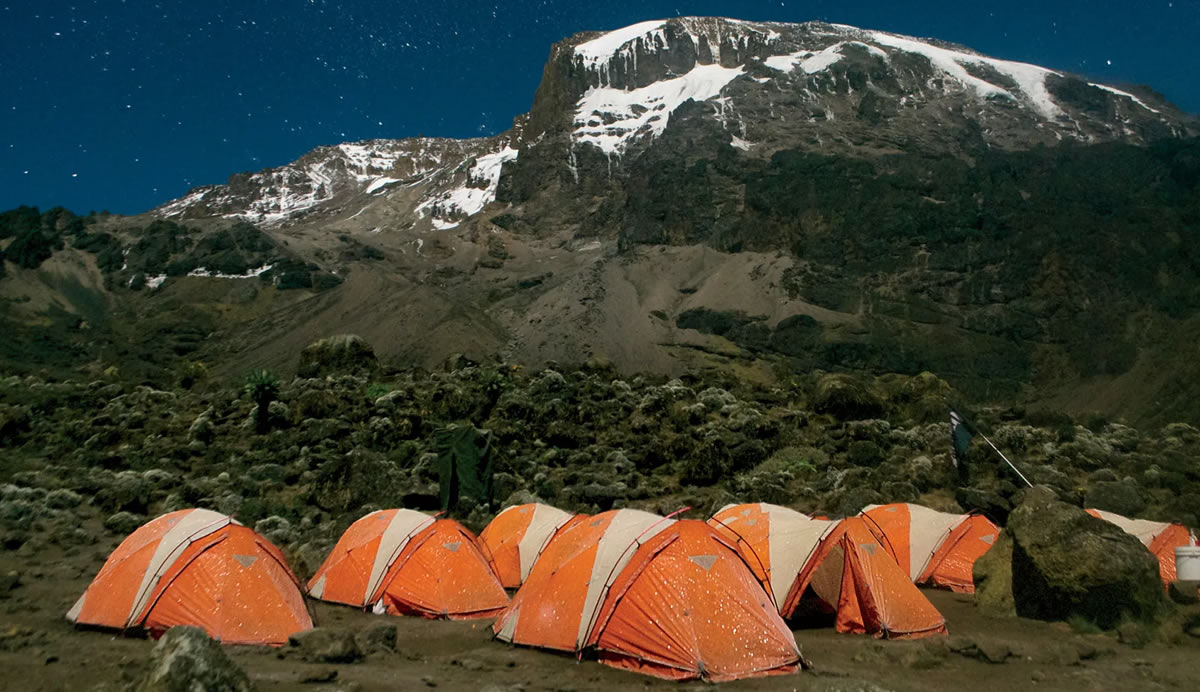
| Accommodation | Private four-season mountain tents |
| Main acclimatisation section | Shira Plateau → Lava Tower → Barranco |
| Technical skills | None required |
Explore the Detailed Itinerary
Day 0Arrival in Tanzania
Arrive at Kilimanjaro International Airport (JRO), where you will meet a Kilimanjaro Joyful Adventures representative and transfer to your hotel. The hotel provides all the essentials for a comfortable stay, and your guide will brief you and check your gear.
Day 1Hotel to Mti Mkubwa Camp
After breakfast and a briefing, you drive to Lemosho Park Gate. From here a forest track that needs a 4WD vehicle leads to Lemosho Glades. You then walk along forest trails to Mti Mkubwa (“big tree”) campsite.
Day 2Mti Mkubwa Camp to Shira 2 Camp
After breakfast at Mti Mkubwa, the trail slowly steepens and enters the giant heather moorland zone. After crossing several streams, you continue over the Shira Ridge, past Shira 1 Camp, and on to Shira 2 Camp on moorland meadows beside a stream. This is the longest day of the trek, so a steady pace matters.
Day 3Shira 2 Camp to Barranco Camp
From the Shira Plateau you continue east, passing the junction toward the peak of Kibo. The path then turns southeast toward Lava Tower, called the “Shark's Tooth”. Shortly after the tower you reach a second junction, which leads toward the Arrow Glacier, and continue down to Barranco Camp. Climbing high and sleeping lower is an important part of acclimatisation.
Day 4Barranco Camp to Karanga Camp
After breakfast at Barranco, you climb the Barranco Wall to the Karanga Valley and the junction that connects with the Mweka Trail. It is a short day that gives your body more time to adapt before the summit push.
Day 5Karanga Camp to Barafu Camp
After breakfast at Karanga Camp, you continue to Barafu Camp. Here you complete the Southern Circuit, which offers views of the summit from many different angles. You then rest, enjoy dinner under the African sky and prepare for summit day.
Day 6Barafu Camp to Uhuru Peak, then down to Mweka Camp
Very early in the morning (midnight to 2 am) you make your way to the summit between the Rebmann and Ratzel glaciers, heading northwest and climbing heavy scree toward Stella Point on the crater rim. This is the most mentally and physically challenging part of the trek. At Stella Point you rest briefly and, weather permitting, are rewarded with an outstanding sunrise. From Stella Point you may meet snow on the roughly one-hour climb to Uhuru Peak, the highest point on Mount Kilimanjaro and the rooftop of Africa. From the summit you descend to Mweka Camp, with one stop at Barafu Camp for lunch. Gaiters and trekking poles help on the loose gravel. Enjoy your last evening on the mountain.
Day 7Mweka Camp to Mweka Gate to Hotel
After breakfast you continue the descent to Mweka Park Gate to receive your summit certificates. At lower elevations it can be wet and muddy, so gaiters and trekking poles will help. Shorts and a T-shirt will probably be plenty to wear, but keep rain gear and warmer clothing handy. A vehicle waits at Mweka Gate to drive you back to your hotel in Moshi (around 60 minutes) or Arusha.
Elevations, distances and times are approximate and can change with weather and group pace.
Camps and Altitude at a Glance
| Night | Camp | Approx. altitude |
|---|---|---|
| 1 | Mti Mkubwa Camp | 2,650 m / 8,700 ft |
| 2 | Shira 2 Camp | 3,850 m / 12,600 ft |
| 3 | Barranco Camp | 3,900 m / 12,800 ft |
| 4 | Karanga Camp | 4,000 m / 13,100 ft |
| 5 | Barafu Camp | 4,600 m / 15,100 ft |
| 6 | Mweka Camp (after the summit) | 3,090 m / 10,150 ft |
Lemosho 7 Days or 8 Days?
| Lemosho 7 days | Lemosho 8 days | |
|---|---|---|
| Pace | Steady, one day shorter | More gradual |
| Acclimatisation | Very good | More time to adapt |
| Best for | Fit trekkers with less time | Those who want the best summit chances |
Compare other options on our Kilimanjaro routes page, including the 7-day Machame and the 9-day Northern Circuit.
Price Includes & Excludes
Includes
- Quality, waterproof, four-season private mountain sleeping tents
- Professional, experienced mountain guides
- All park fees
- Airport transfers
- Rescue fees
- All meals while on the mountain
- Guides, porters and cook salaries and park fees
- Quality mess tents with table and chairs
- Large portions of fresh, healthy, nutritious food
- Clean, purified drinking water
- Oximeter
- Medical kit
- Emergency oxygen
- Crisis management and safety procedures
- Fair and ethical treatment of porters
- 2 nights' accommodation in Moshi/Arusha before and after the climb
Excludes
- Flights
- Alcoholic and soft drinks
- Visa fees
- Tips and personal spending money for souvenirs, etc.
- Travel insurance
Read our booking terms and check the Tanzania visa guide before you travel.
How to Prepare for the Lemosho Route
Train for long days
Day 2 is the longest, at around 16 km. Practise hiking with a loaded daypack and break in your boots well before you travel.
Pack for every climate
You pass from forest to arctic summit conditions. See our equipment and gear list.
Go slowly
Drink plenty of water, walk at a steady pace and tell your guide about any symptoms. Read about safety on Kilimanjaro.
Choose your season
The dry seasons, January to mid-March and June to October, usually give the best conditions. See the best time to trek.
Lemosho 7 Days: Frequently Asked Questions
Is the 7-day Lemosho route good for acclimatisation?
Yes. Lemosho is known for a great acclimatisation profile and some of the highest summit success rates among Kilimanjaro routes. The 7-day itinerary includes the Lava Tower section on day 3, where you climb high and sleep lower at Barranco.
How many days is the Lemosho route?
Lemosho is available in three itineraries: 6, 7 and 8 days on the mountain. The 8-day version adds more time to acclimatise.
Where does the Lemosho route start?
It starts on the western slope of Kilimanjaro. You drive to Lemosho Park Gate, take a 4WD forest track to Lemosho Glades, then walk to Mti Mkubwa camp.
What is Cathedral Peak?
Cathedral Peak is one of the highest points of the Shira volcano (3,872 m). Lemosho gives you the chance to take an acclimatisation hike there and enjoy some of the best views on Kilimanjaro.
Do we sleep in tents on the Lemosho route?
Yes. You sleep in quality, waterproof, four-season private mountain tents at designated campsites. There are no huts on this route.
When does the summit attempt start?
The summit attempt normally starts between midnight and 2 am from Barafu Camp, depending on the group and conditions.
How long is the drive back after the trek?
A vehicle meets you at Mweka Gate and drives you back to your hotel in Moshi (around 60 minutes) or Arusha.
Should I choose 7 or 8 days on Lemosho?
Choose 7 days if you have limited time and good fitness. The 8-day Lemosho gives more time to acclimatise and is generally the safer choice for your summit chances.
What is not included in the price?
Flights, alcoholic and soft drinks, visa fees, tips and personal spending money for souvenirs, and travel insurance are not included.