Last updated: October 2026 · Private departures for 2026 & 2027
Machame Route — 6 Days
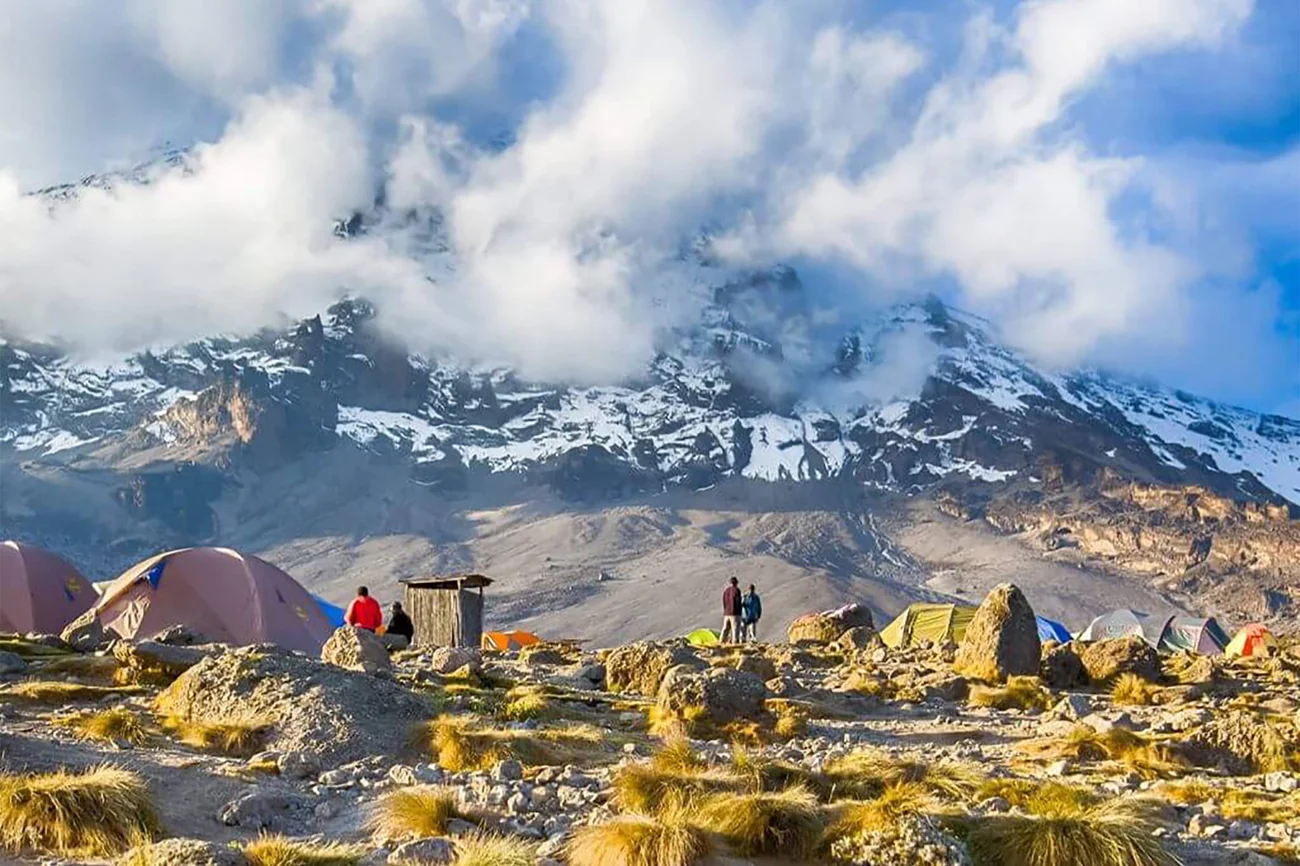
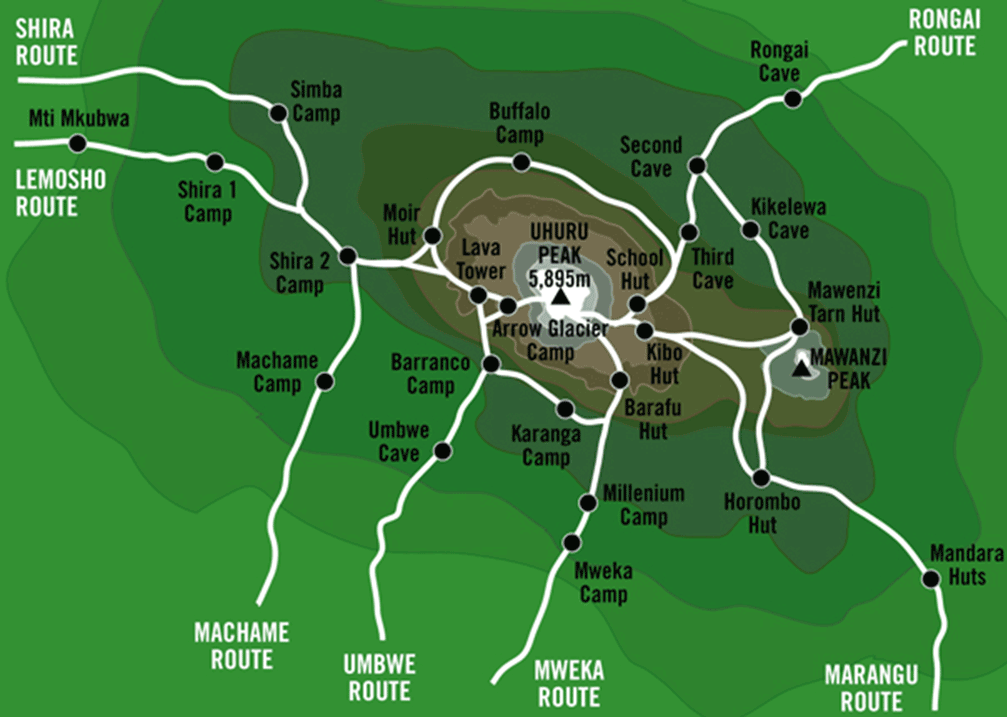
The Machame Route, nicknamed the Whiskey Route, is one of the most popular ways up Kilimanjaro. It starts at Machame Gate on the southern flank, crosses rainforest and moorland, and passes Shira Plateau, Lava Tower and the Barranco Wall before the summit push from Barafu Camp. You descend a different way, via Mweka, so the scenery changes every day.
The 6-day schedule covers about 62 km and is steeper and more demanding than the hut-based Marangu Route. It does not need technical climbing skills, but good fitness and prior hiking experience are essential. If you can spare a day, the 7-day Machame adds a night at Karanga for better acclimatisation and higher summit odds.
Machame 6 Days Quick Facts
| Route type | Camping · different routes up and down |
|---|---|
| Duration | 6 days on the mountain (plus arrival day) |
| Start / finish | Machame Gate → Mweka Gate |
| Camps | Machame · Shira · Barranco · Barafu · Mweka |
| Highest points | Lava Tower ~4,630 m · Uhuru Peak 5,895 m |
| Total distance | Approx. 60–62 km |
| Best months | Dry seasons — see best time to trek |
| Departures | Private departures for 2026 and 2027 · dates on request |
| Typical success range | Roughly 75–85% (operator-dependent; lower than 7-day Machame) |
Difficulty & Who the 6-Day Machame Suits
The 6-day Machame is harder than the 7-day version of the same trail because Day 4 combines the Barranco Wall scramble, the Karanga crossing and the climb to Barafu into one long day. You then sleep nearly 700 m higher than the previous night and start summit night only a few hours later.
Choose 6 days if you are fit, enjoy long hiking days, have prior multi-day hiking or altitude experience, and are short on time. Prefer 7 days (or longer) if this is your first high-altitude trek, you want more recovery before summit night, or you can add one extra day to improve your odds.
No ropes or technical climbing skills are required. The Barranco Wall is a hands-on scramble for balance, not a rock climb. Good cardiovascular fitness, strong legs and the ability to walk 6–8 hours on consecutive days at altitude are the real requirements. Read our safety guide and equipment list before you book.
Detailed Day-by-Day Itinerary
Day 0 — Arrival
Arrive at Kilimanjaro International Airport (JRO). A Kilimanjaro Joyful Adventures representative meets you and transfers you to your hotel in Moshi or Arusha for gear check and a pre-climb briefing. Use the evening to rest, hydrate and ask any last questions.
Day 1 — Machame Gate to Machame Camp
Drive from your hotel through Machame village to the park gate and complete registration. Walk through rainforest on a winding trail up a ridge. The lower trail can be muddy and slippery after rain, so gaiters and trekking poles help. Dinner and overnight at Machame Camp. Meals: lunch, dinner.
Day 2 — Machame Camp to Shira Camp
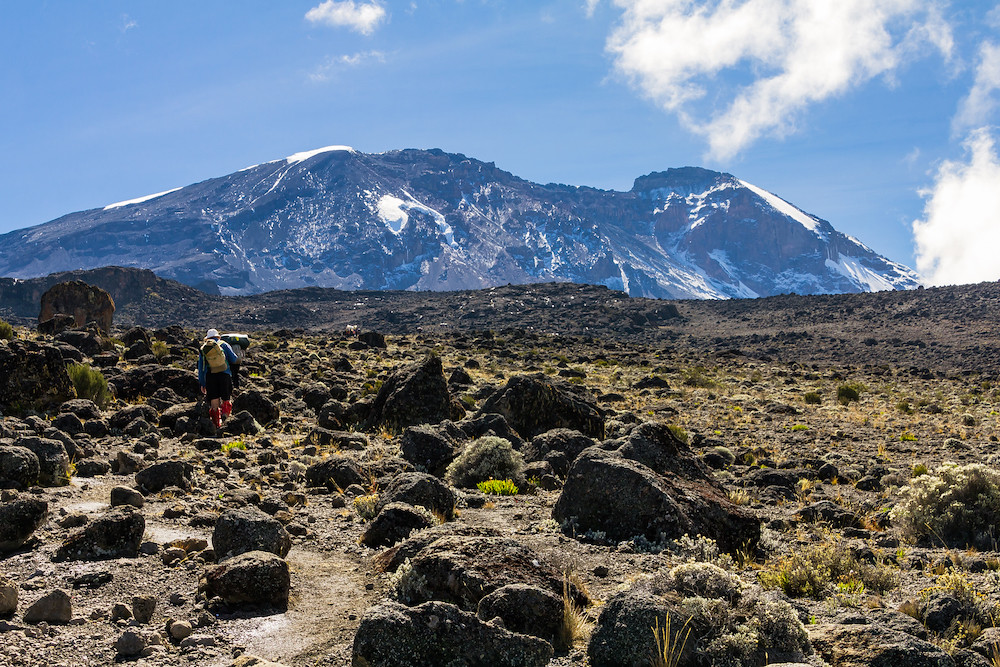
Leave the forest and climb a steep, rocky ridge covered in heather, then turn west into a river gorge and onto the Shira Plateau. Views of Kibo often open up here. Dinner and overnight at Shira Camp. Meals: breakfast, lunch, dinner.
Day 3 — Shira Camp to Lava Tower to Barranco Camp
Climb east past the junction toward Kibo to Lava Tower (the “shark’s tooth”), your high point before summit night. Then descend to sleep at Barranco Camp. Ending the day lower than your high point is the classic “climb high, sleep low” pattern and an important part of acclimatisation. Meals: breakfast, lunch, dinner.
Day 4 — Barranco Camp to Barafu Camp via Karanga
Scramble up the Barranco Wall (hands for balance, no technical climbing), then cross ridges and valleys through Karanga (about 4,035 m) and continue to Barafu Camp. This is the longest and hardest pre-summit day on the 6-day schedule. Eat early and rest: summit night starts around midnight. Meals: breakfast, lunch, dinner.
Day 5 — Summit Day: Barafu → Uhuru Peak → Mweka Camp
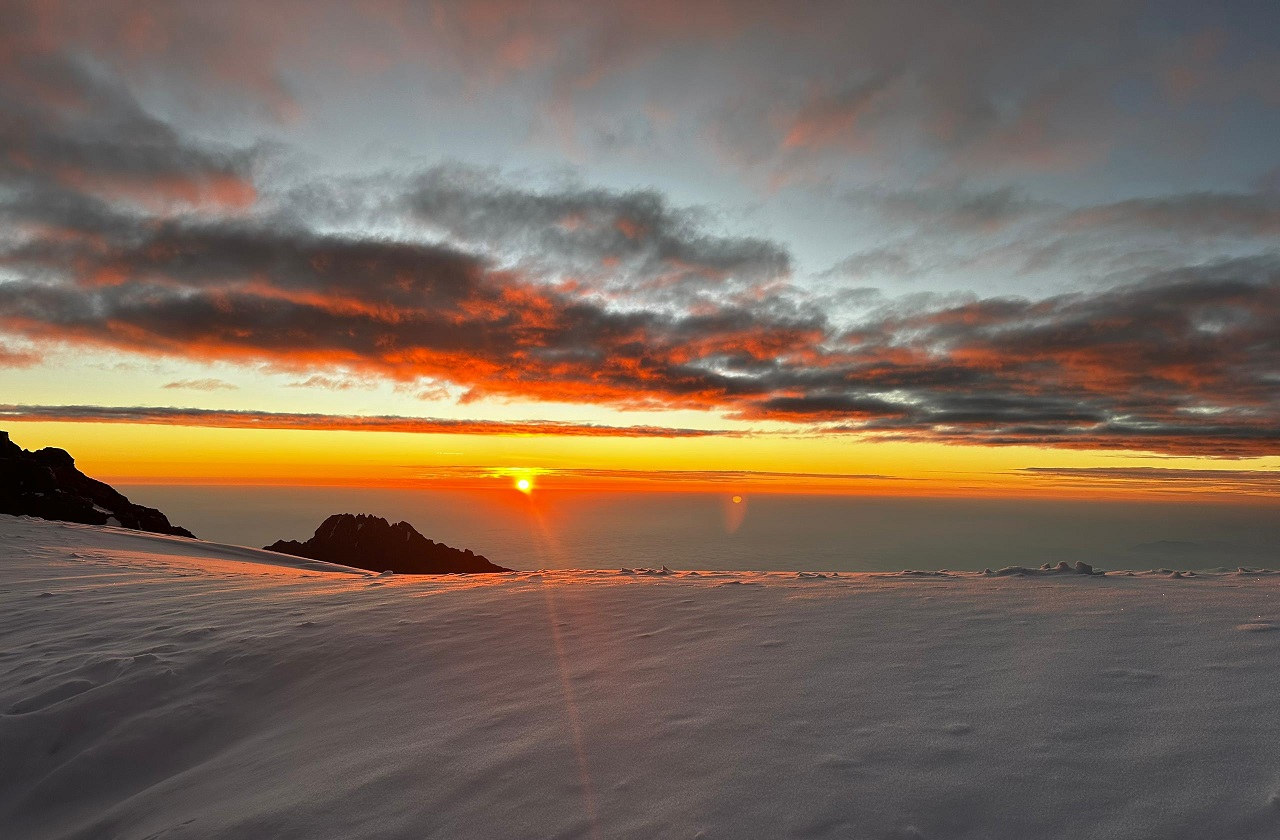
Start around midnight by headlamp, climbing between the Rebmann and Ratzel glaciers through heavy scree to Stella Point (about 5,756 m) on the crater rim. Sunrise here is often spectacular. Continue along the rim to Uhuru Peak (5,895 m).
Descend to Barafu for a rest and lunch, then continue to Mweka Camp in the upper forest. Mist or rain is common in the late afternoon. Poles and gaiters help on loose gravel. Meals: breakfast, lunch, dinner.
Day 6 — Mweka Camp to Mweka Gate
After breakfast, descend through rainforest to Mweka Gate, where you receive your summit certificate. The lower trail can be wet and muddy. A vehicle meets you at the gate and drives you back to your hotel in Moshi or Arusha.
Machame 6 Days vs 7 Days
The 7-day schedule adds a short extra day before Barafu (overnight at Karanga), giving your body more time at altitude before summit night. Most operators recommend 7 days for first-time high-altitude climbers.
| Feature | Machame 6 days | Machame 7 days |
|---|---|---|
| Nights on mountain | 5 | 6 |
| Barranco to Barafu | One long day via Karanga | Split over two days via Karanga overnight |
| Acclimatisation | Good (Lava Tower day) | Better — one more night at altitude |
| Typical success range | Roughly 75–85% | Higher, often mid- to high-80s+ |
| Best for | Fit, experienced trekkers short on time | Most climbers, especially first-timers |
Tips for a Successful 6-Day Machame Climb
Train for long days
Practice consecutive 6–8 hour hikes with a daypack. Stair and hill work build the leg endurance you will need on Day 4 and summit night.
Hydrate and “pole pole”
Drink 3–4 litres per day. Walk slowly (“pole pole” in Swahili). Rushing increases altitude risk and wastes energy you need later.
Protect sleep before summit
On Day 4 you arrive at Barafu tired. Rest, eat, and sleep as much as possible before the midnight start. Earplugs and a warm sleeping bag help.
Listen to your body & guides
Pulse oximeter checks and experienced guides are there for a reason. Report headaches, nausea or unusual fatigue early. Descent is the only cure for serious altitude illness.
Is the 6-Day Machame Route Right for You?
Choose it if you are fit, enjoy long hiking days, and want varied scenery without the hut crowds of Marangu. Consider other routes if you want more acclimatisation time: Machame 7 days, Shira 6 days, Lemosho 8 days, or the hut-based Marangu 6 days. See all Kilimanjaro routes.
Price Includes & Excludes
Included
- Professional, experienced mountain guides
- All park fees and rescue fees
- Four-season private sleeping tents
- Mess tent with table and chairs
- All meals on the mountain, fresh and nutritious
- Clean, purified drinking water
- Guide, porter and cook wages
- Airport transfers
- Pulse oximeter monitoring
- Medical kit and emergency oxygen
- Crisis management and safety procedures
- Fair and ethical treatment of porters
- 2 nights hotel in Moshi/Arusha (before & after)
Not included
- International and domestic flights
- Alcoholic and soft drinks
- Tanzania visa fees
- Tips for guides, porters and cook
- Personal spending and souvenirs
- Travel insurance (medical + evacuation recommended)
Request a current quote for your dates and group size. Park fees and operational costs are updated regularly for 2026–2027.
Related Kilimanjaro Itineraries
 7 Days Machame Route
 6 Days Shira Route
 6 Days Marangu Route
 All Kilimanjaro Routes
Machame 6 Days: Frequently Asked Questions
Is 6 days on Machame enough?
Six days is the shortest practical Machame schedule. It works for fit trekkers with some previous altitude or hiking experience, but the 7-day version adds a night for acclimatisation and gives better summit odds.
Why is Machame called the Whiskey Route?
It is the nickname for Machame, a steeper and more demanding route than the Marangu “Coca-Cola” route, and one of the most popular routes on the mountain.
Do you sleep in tents?
Yes. You sleep in private four-season mountain tents, and meals are served in a mess tent with table and chairs.
How hard is the 6-day Machame Route?
It is moderately difficult to demanding, with steep, rocky sections including the Barranco Wall scramble. No technical climbing skills are needed, but good fitness is essential. Day 4 (Barranco to Barafu in one push) is the hardest pre-summit day.
What is the highest point before summit night?
Lava Tower at about 4,630 m on day 3. You then descend to sleep at Barranco Camp — classic “climb high, sleep low”.
What time does summit night start?
Around midnight from Barafu Camp. You reach Stella Point (about 5,756 m) around sunrise, then continue to Uhuru Peak (5,895 m), depending on pace and conditions.
What is the typical summit success rate?
Operator reports for the 6-day Machame commonly fall in the roughly 75–85% range. The 7-day version of the same route is usually higher because of the extra night at altitude. Fitness, pacing, weather and individual response to altitude all affect results.
What is included in the price?
Guides, porters and cook, park and rescue fees, tents and mess tent, all mountain meals, purified water, airport transfers, hotel nights as per package, pulse oximeter checks, a medical kit and emergency oxygen. Flights, visa, tips, drinks and insurance are not included.